Subjects
Grades
Humanist values gave rise to a number of new technical and technological advances in various fields of science during the Renaissance. The Church particularly disagreed with all these scientific changes, because they departed from the teachings of the Church.
Humanists place the human being at the centre of their concerns. They were also the main subjects of scientific study. The intellectuals of this era used experimentation and observation to study and discover the world in which they lived.
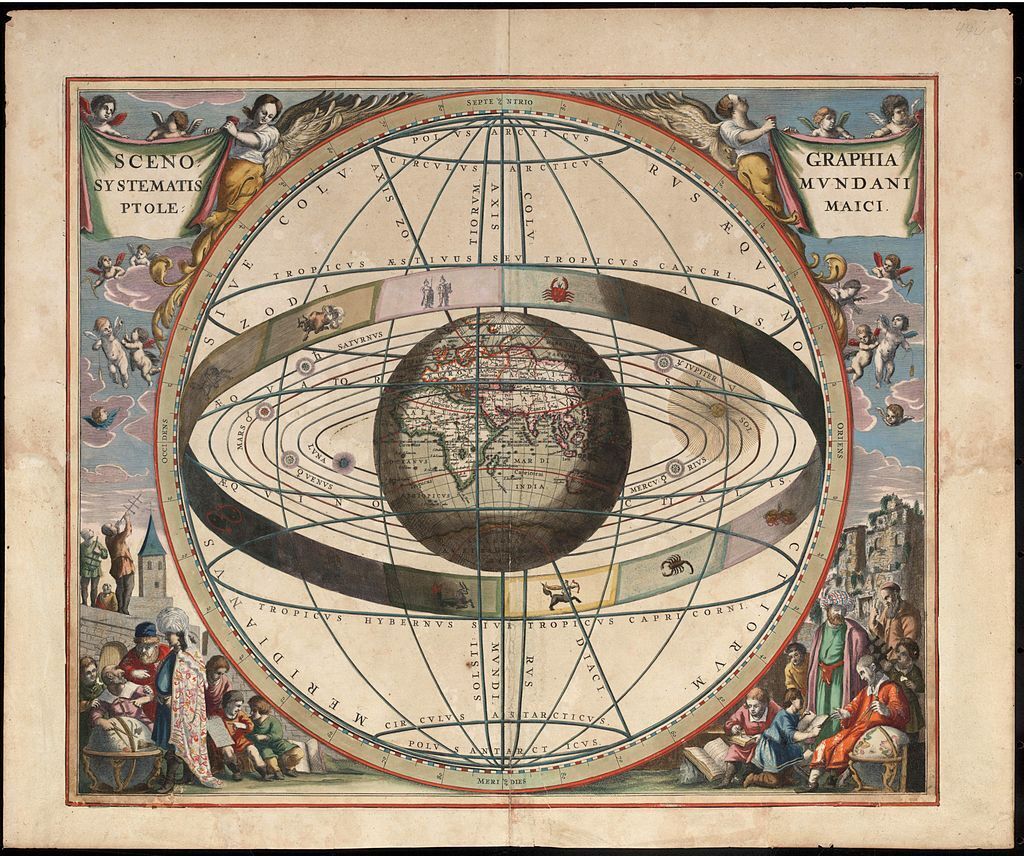
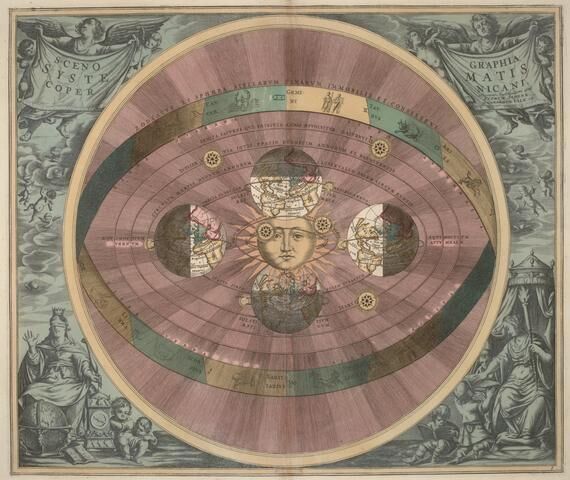
One of the most important scientific discoveries of the Renaissance was heliocentrism. Before the advent of this theory by the humanist Nicolaus Copernicus (1473-1543), the people of Europe in the Middle Ages believed in geocentrism, i.e. that the Earth is at the centre of the Universe and that the other stars rotate around it. The theory of geocentrism was defended by the Church, among others, and was explained by the fact that the Earth was a creation of God. Nicolaus Copernicus challenged this theory and advocated heliocentrism instead. This theory asserted that the Sun was at the centre of the Universe and that the stars, including the Earth, rotated around it. Of course, the religious authorities of the time were totally opposed to heliocentrism, because this theory rejected the idea that God's creation occupied a central place in the Universe.
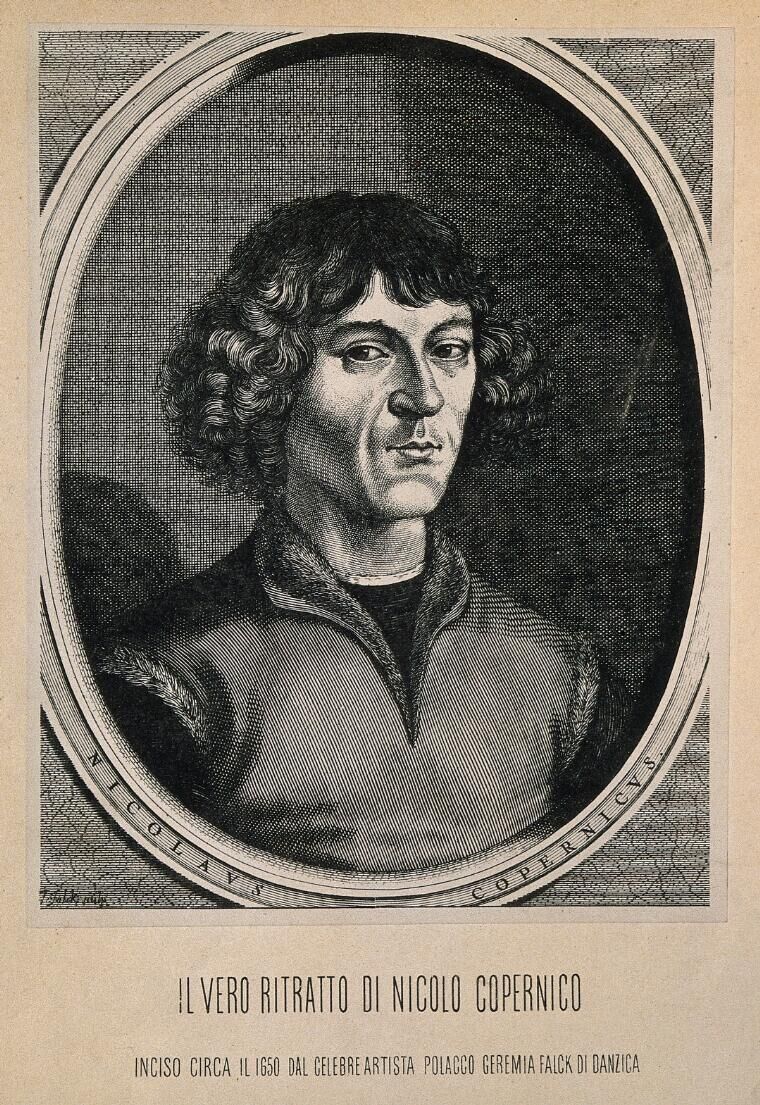
Nicolas Copernicus
Source : Nicolaus Copernicus. Reproduction de la gravure au trait d'après J. Falck [Reproduction], Falck, J., vers 1610-1677, Wellcome library, (URL). CC BY 4.0
| Theory | Geocentrism | Heliocentrism |
|---|---|---|
| Summary of the theory |
The Earth is at the centre of the Universe and all the other stars revolve around it. |
The Sun is at the centre of the Universe and all the other stars revolve around it. |
| Theory defended by... | The Church | Nicolas Copernicus |
Experimentation and observation also led to advances in medical science. Thanks to dissections, scientists of the time were able to improve their knowledge of the human body. The humanist André Vésale (1514-1564) contributed to the development of medicine through his numerous dissections, some of which took place in public. Once again, the religious authorities of the time disagreed with these new discoveries. For example, the Church was opposed to the practice of dissection, which it saw as a disrespect for God's creation.
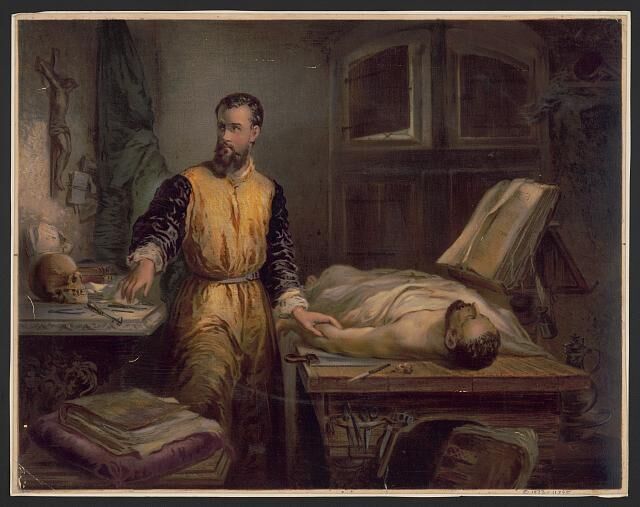
André Vésale performing a dissection
Dissection is the practice of methodically cutting up the body of a living being to study its anatomy and functioning.
Printing was one of the most important factors in the spread of humanist ideas. It was around 1450 that Johannes Gutenberg perfected the printing press, which enabled texts to be copied more quickly and efficiently. Gutenberg had the idea of forging movable metal type and soaking it in ink before pressing it against paper using a press. This revolutionary invention not only cut production time, but also considerably reduced the cost of producing books. This time, contrary to its attitude towards other technological advances, the Church was in agreement with Gutenberg's invention. The printing press enabled humanist works to be disseminated, but it also brought more people into contact with religious works. For example, the first book printed by Gutenberg was the Bible.

Type of letters used in Gutenberg's printing presses

Reproduction of a Gutenberg printing press
The Church was generally reticent about the various scientific advances of the Renaissance. It believed that the focus should be more on God and less on human beings. Religious authorities criticised the fact that humanists questioned the importance of God in the creation of humans and the universe. On the other hand, the invention of the printing press was beneficial for the Christian religion, which saw its works become more accessible to the general public.