Subjects
Grades
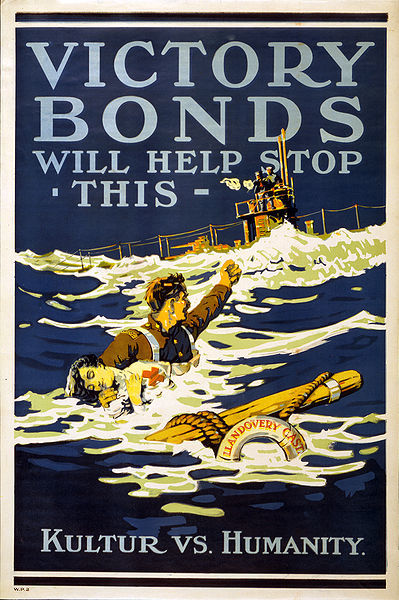
Subscribing to the Victory Loan Puts an End to Piracy
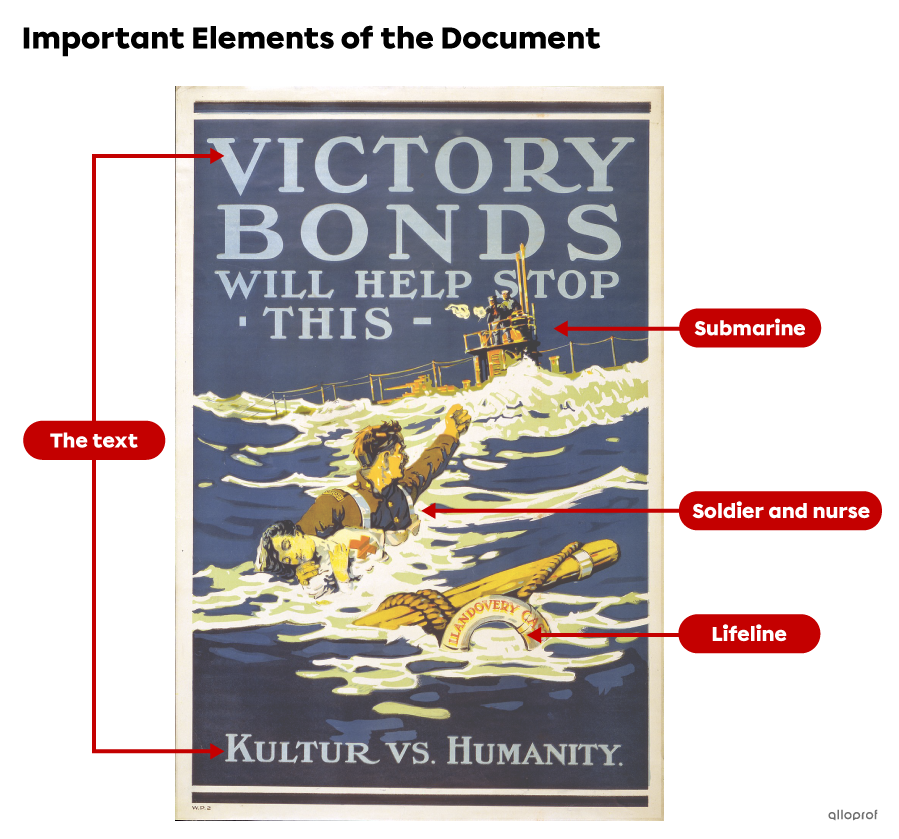
The arrows above show the important elements of the document. These elements place the document in its context. They are all clues to understand more about history.
Why was this document produced? By whom? Why was this scene depicted? Does it refer to an actual fact? All of these questions must be answered in order to analyze this document. Once we have these answers, this document will make more sense, allowing you to acquire new historical knowledge.
We see a lifeline in the image with Llandovery Cast[...] written on it. If we run a quick search using an internet search engine, we find information about a ship, the HMHS Llandovery Castle. This boat was a Canadian hospital ship that was in operation during the First World War. As we read further, we learn that the Llandovery Castle was sunk on the night of June 27, 1918.
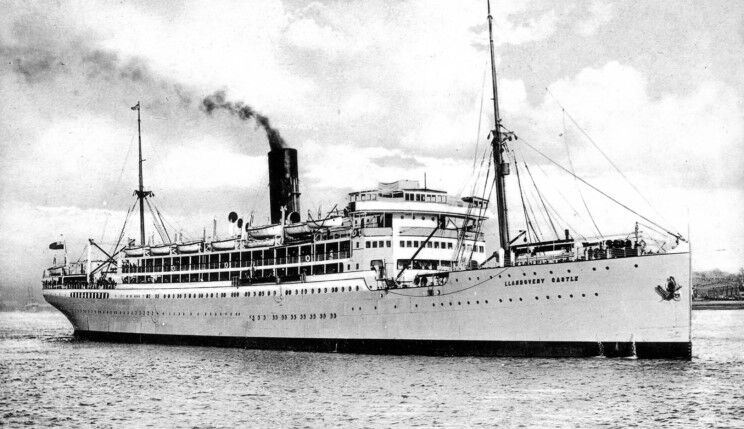
The HMHS Llandovery Castle
Researching the tragic end of the Llandovery Castle reveals that the ship was torpedoed by a German submarine, or U-boat, off the Irish coast. Many German submarines were located in the Atlantic in August 1914 and were used to attack the British fleet. Over time, Germany began to attack other combatants, including the United States and Canada, and targeted maritime convoys to cut off the Allies’ supply lines.
The Llandovery Castle was a hospital ship that transported mostly Canadian soldiers and nurses. More than 234 people died on the night that it sank, including fourteen nurses. Only twenty-four people survived.
The following text appears on this image: “Souscrire à l’emprunt de la victoire, c’est mettre fin à la piraterie” [Subscribing to the victory loan puts an end to piracy]. We need to know what the victory loan was in order to understand the meaning of this poster. A web search allows you to learn more about the victory loan.
Victory loans were created by the Canadian government in 1915. These bonds issued by the federal government were used to collect money to finance war-related expenses. Canadian citizens, as well as companies and organizations, could buy these bonds. Buying a bond meant lending money, with a certain interest rate, to the government for a period of 5 to 20 years. When the bond was repaid, buyers recovered their loan and pocketed the interest. The government issued a total of more than one hundred million dollars in victory bonds between 1915 and 1919.
This poster was produced by the War Poster Department in 1918. There is also an English version (see below). The department was created in 1916 to support the Canadian war effort. To do so, the department provided financing through victory loans and recruited soldiers. So, this is a war propaganda poster.
The term propaganda means using specific information to convince people to accept certain ideas, thoughts, actions. Films, speeches, posters and other media can be used to deliver propaganda.
The poster’s message was to convey the brutality of Canada’s enemies which were, in this case, the Germans. For this reason, this poster depicts the aftermath of the HMHS Llandovery Castle being torpedoed. In 1918, this shipwreck shocked Canadians and the hospital ship survivors’ accounts were terrifying. Witnesses reported that the Germans deliberately targeted and destroyed the Llandovery Castle lifeboats that the survivors were using. The Germans also shot at victims in the water.
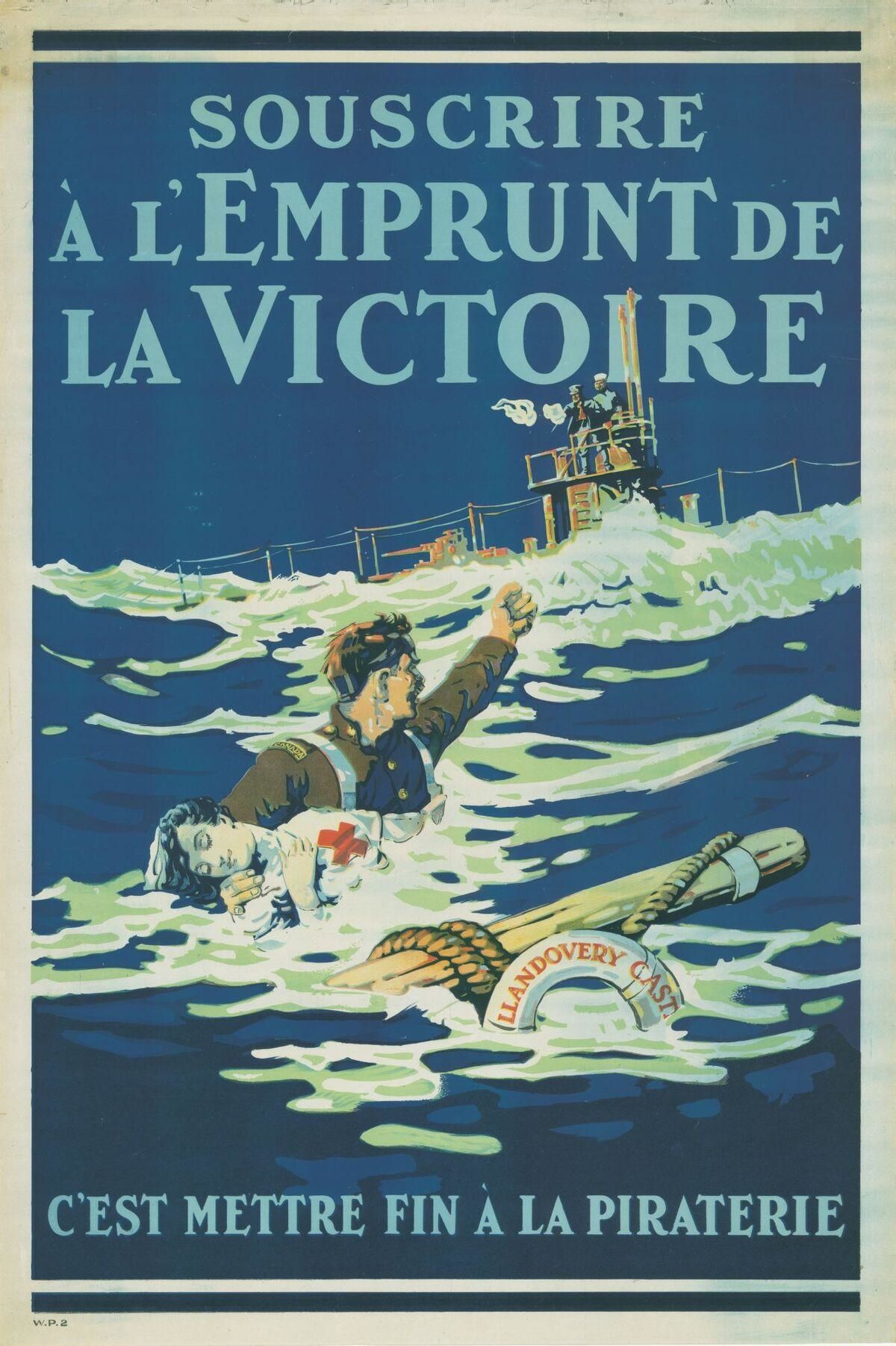
French Version of the Poster
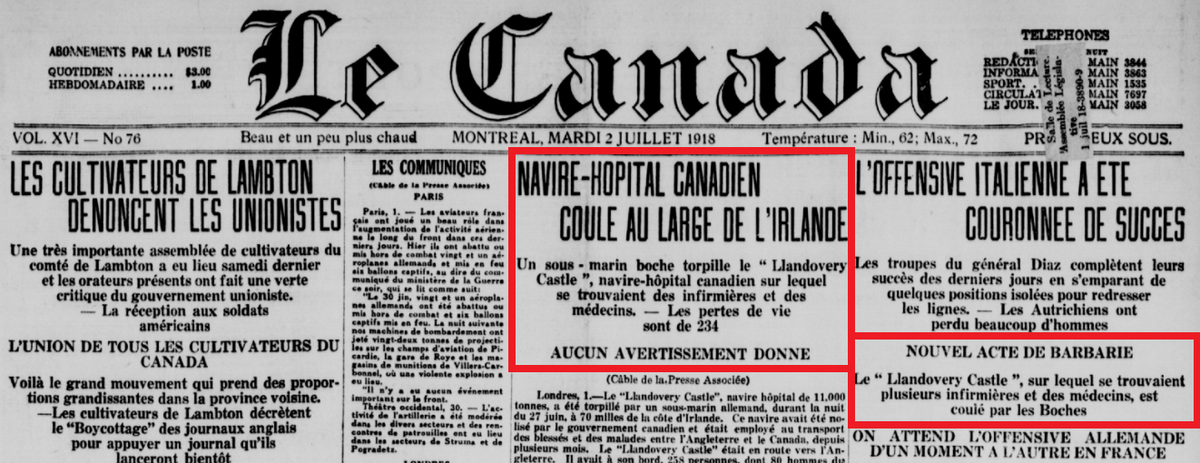
Excerpt from the newspaper Le Canada, published on July 2, 1918, describing the shipwreck of the HMHS Llandovery Castle