Subjects
Grades
Agriculturalism is an ideology that promotes rural living and a traditional way of life. It fosters traditional values such as family, the French language and Catholicism, while opposing the industrial world.
Agriculturalism emerged due to the negative effects of industrialization. With the government’s support, agriculturalists proposed a back-to-the-land movement. In 1888, Premier Honoré Mercier created the Department of Agriculture and Colonization to oversee the exploitation of new regions in Quebec. The following year, he created the Order of Agricultural Merit, which promoted agriculture.
The clergy represented a valuable ally to agriculturalists. As an example, Father Antoine Labelle was heavily involved in developing new regions to colonize in the Laurentians and the Outaouais.
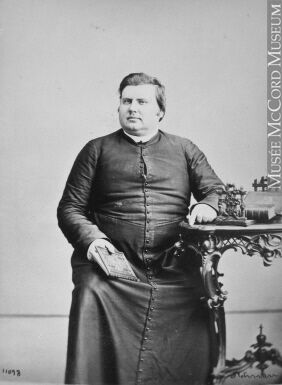
Father Antoine Labelle, Deputy Minister of Agriculture and Colonization from 1888, helped develop certain Quebec regions to deter French Canadians from emigrating to the United States.
Another colonization movement began in the 1930s during the Great Depression, when going back to the land was considered a solution to the economic crisis. In the Lower St. Lawrence, Monsignor Joseph-Georges Courchesne, Bishop and later Archbishop of Rimouski, was a member of this movement.
Agriculturalism was also explored in literature. Claude-Henri Grignon’s novel Un homme et son péché, recounts the day-to-day lives of colonists who settled in the Laurentians.
Later, in the mid-1900s, Father Charles-Émile Gadbois published several collections of traditional French-Canadian songs (La Bonne Chanson).
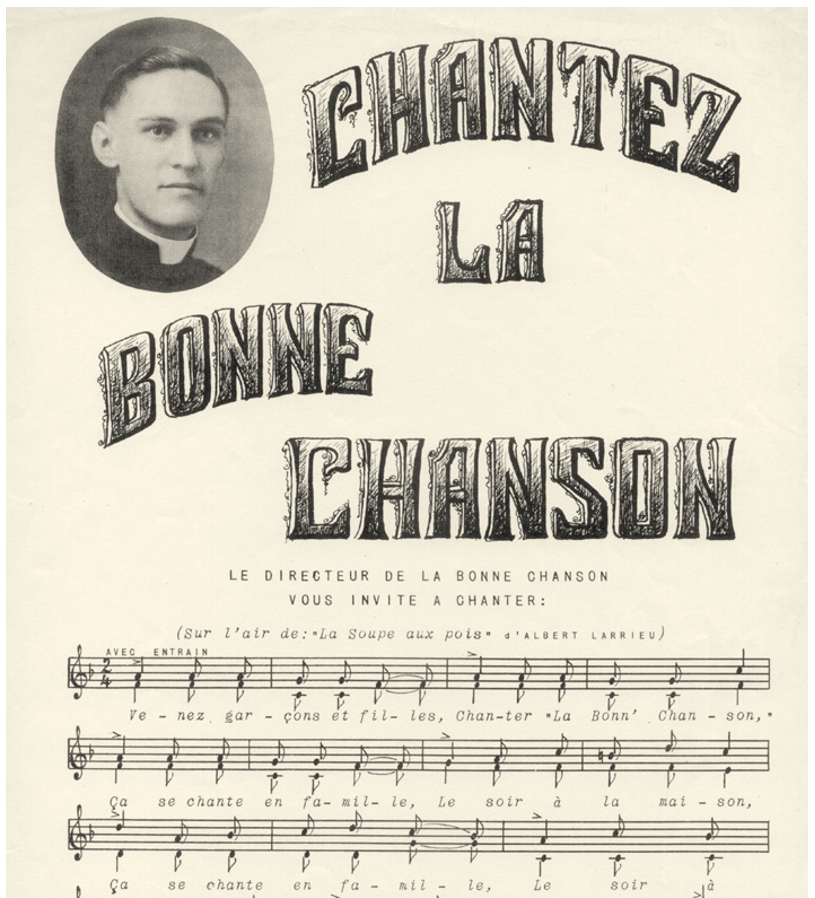
Chantez la Bonne Chanson, La Bonne Chanson, third album, 1940, p.3 Centre d’histoire de Saint-Hyacinthe, Fonds Charles-Émile Gadbois, AFG 042