Subjects
Grades
Visualizing is creating mental pictures of the text.
| When to do it |
| While reading the text |
| Reading intention |
| Create a mental picture from the text |
| Outcome |
| Better understanding |
| Easier to remember characters, settings and story events |
How to Do It
Look at the word choices
Use the 5 senses
Project yourself
The author’s purpose is reflected in the words used. Reflecting on the vocabulary choices can help create a precise mental picture that will enhance comprehension.
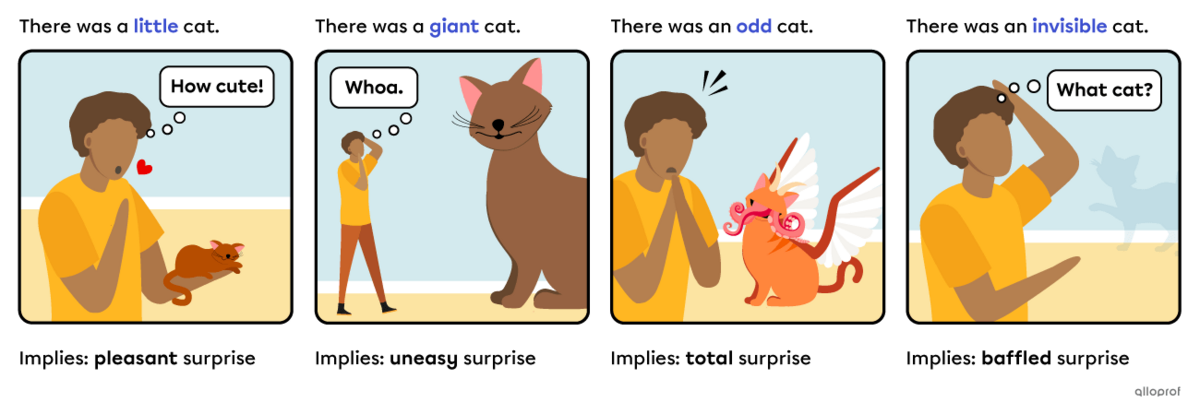
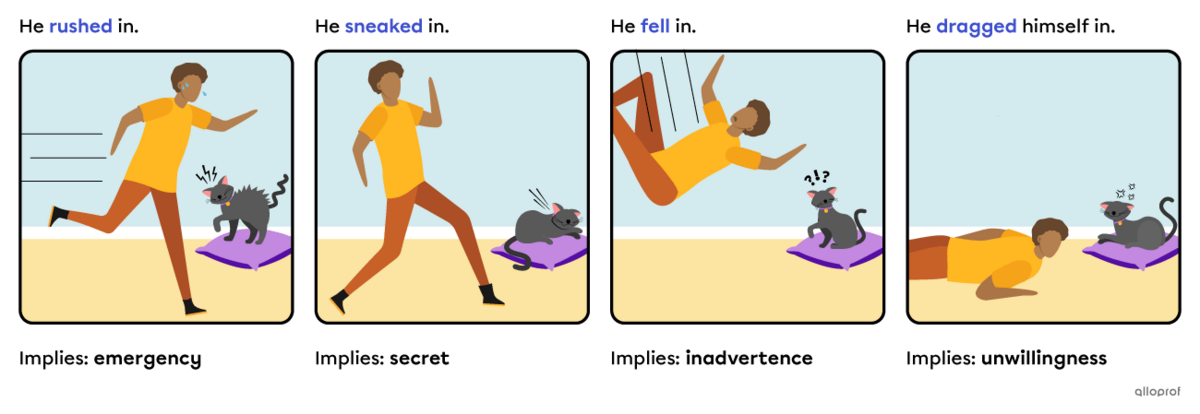
Let’s take for example a story where a character enters a room. In the room, there is a cat and the character sees it for the first time.
Using a different adjective to describe the cat can change the character’s reaction.
Using a different verb to express the action of the character entering the room.
To learn more about a strategy, click its name.
|
Get an overview of the text. |
Quickly search & find information |
Ask yourself questions |
|
Visualizing |
||
|
Create mental pictures |
Relate to the text |
Read between the lines |
|
Write down notes & comments |
Understand challenging words |
Sum up main idea & key elements |
|
Explore sources to come up with new perspectives |
Form an opinion on the quality of the text |
Look at the structure and techniques used |