Subjects
Grades
Nouns are words used to represent:
places
things
They can be either the subject or the object of a sentence. Nouns can be defined by adjectives or even replaced by pronouns.
They come in many different types.
A proper noun is used to name specific:
people
places
things
It is recognizable by the capital letter at the beginning of the word.
People

In the hockey world, Wayne Gretzky has the most individual records, but in recent years, people like Sydney Crosby, Alex Ovechkin and Connor McDavid have come close.
Places

The Bird Nest in Beijing is a world-famous stadium. Madison Square Garden is also a very well-known arena in the USA.
Things
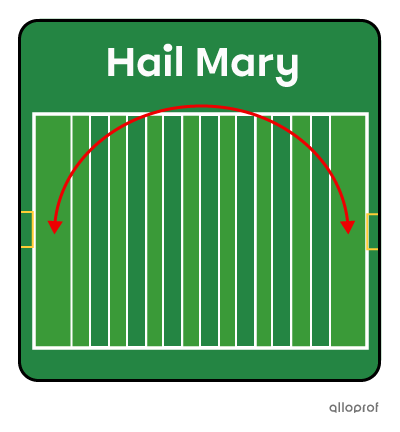
A Hail Mary pass is a very long pass in American football.
A common noun also refers to:
people
places
things
However, it is not specific and does not start with a capital letter.
People

The goalie wears a lot more equipment than the other players.
Places
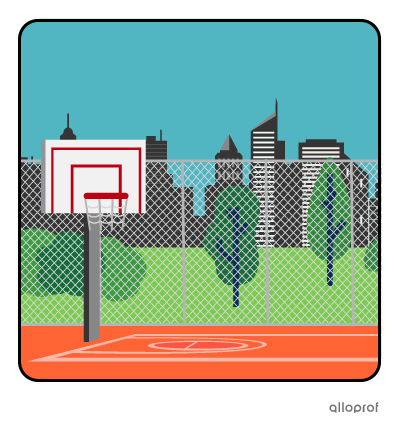
Street* basketball is popular in areas with public courts.
*In this situation street is used as an adjective.
Things
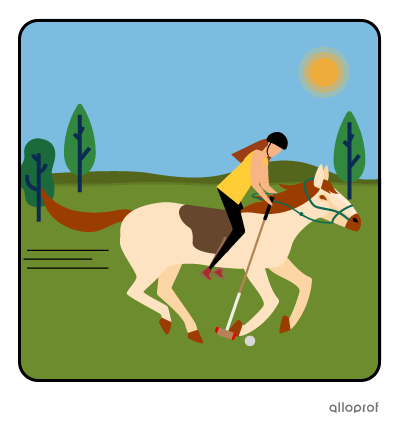
When you play polo, you ride on a horse and use a mallet to hit a ball.
Compound nouns are a combination of two or more words to create another word.
They generally have 2 parts. The first part tells you the type or purpose of the second part which identifies the object, place or person.
Here are some examples with different combinations:
|
Combination |
Compound noun examples |
In context |
|
noun + noun |
police officer |
Police officers are involved in many difficult situations around stadiums on game day. |
|
adjective + noun |
white board |
Coaches use white boards to come up with strategies around the world. |
|
verb (ing) + noun |
swimming pool |
Swimmers need swimming pools to train. |
|
noun + verb |
photo shoot |
Some professional players participate in photo shoots to help their community image. |
|
preposition + noun |
aftermath |
What was the aftermath of the entire rulebook change? |
|
verb + adverb |
lookout |
The scouts have been on the lookout for prospects. |
|
adjective + verb |
dry-cleaning |
The player had to take his uniform for dry-cleaning because of the blood stains. |
Compound nouns can be written with two distinct words, one word or hyphenated. The spelling of compound nouns is mostly regional, and there is no definite spelling rule.
Concrete nouns can be perceived by our physical senses, meaning that we can see, touch, smell, taste and hear them.
They do not require capitalization.
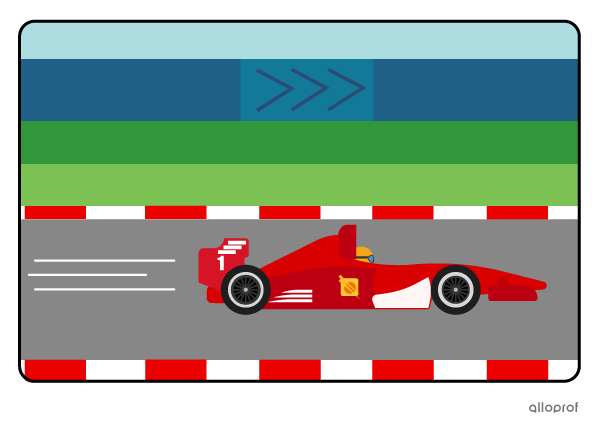
The racecar is speeding down the lane.

The bell is ringing loudly.
Abstract nouns are nouns that cannot be perceived by our physical senses. They can be concepts, emotions, events, a quality or even an idea.
Even if we can’t literally hear, taste, smell, see or feel them, we know they exist.
They do not require capitalization.

Time is passing and we can’t stop its progress.

He has a very large ego, which can become a source of conflict.
Collective nouns are words that represent groups.
They do not require capitalization.
Here are some examples:
|
Group of people |
Group of animals |
Group of things |
|
a band of musicians |
an ambush of tigers |
an album of photographs |
Using prefixes and suffixes helps to clarify the meaning of certain words. This consists of using a base word and adding to the beginning of the word or the end of it. Many words of different word classes can be created using prefixes and suffixes.
Here are a few examples of new nouns created using prefixes and suffixes:
|
Prefix |
Base word |
Suffix |
New noun |
|
|
New York |
er |
NewYorker — a person living in New York City |
|
bi |
cycle |
|
bicycle — a two-wheeled vehicle |
|
pre |
treat |
ment |
pretreatment — a treatment done prior to another action on something or someone |
A gerund is a type of noun derived from a verb but has the properties of a noun.
For example:
|
Verb |
Gerund |
|
I love to hike. |
Hiking is my favorite sport. |
|
She trains to improve her speed. |
Her training made her really fast. |